



Sightseeing in Rome - what to see. Complete travel guide
 The Eternal City has attracted the attention of millions of people for more than 2000 years. It is still one of the most beautiful and romantic cities in the world. Rome is the essence of “dolce vita”. Numerous clothing stores by Italian designers, ice cream, creamy cappuccino and fine wines - the choice is always up to you.
Travelers, who will stay in Rome with children, should definitely visit the Explora Children’s Museum. In this interactive museum, kids will learn many new and exciting things. They …  Open
Open
Open
 . This is also the location of the most famous landmarks of Rome. The districts of Trastevere , which is situated on the opposite bank of the Tiber, and Monti are also known all over the world. Do not forget to visit Pigneto , the city quarter that is usually called “the most Roman quarter in the city”.
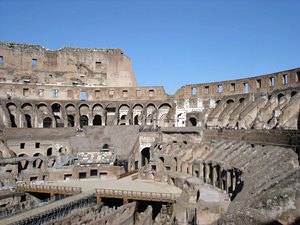
The amphitheater of Flavius
was built in the first century AD. The amphitheater was built right on the site of the artificial sea made by order of Nero. The building of the Coliseum was an attempt to erase bad memories about Nero and to return love of ordinary people. The Coliseum was the largest amphitheater of its type in the Roman Empire. The building of the Coliseum was finished in 80 AD. In order to celebrate the grand opening, Emperor Titus ordered to organize games in its arena. The games lasted 100 days and included battles of gladiators, battles of cranes and elephants. Approximately 9,000 animals were killed during these fights. Later, the amphitheater was expanded. One more row of seats was added, as well as some new passages and rooms under the arena. Nowadays, the amphitheater of Flavius is known as the Coliseum. Most probably, the structure received this name because of the 40-meter sculpture (or "Colossus") of Nero that stood nearby, and not because of the size of the construction as many think. Copyright www.orangesmile.com
In Rome you will find restaurants either for most hard-to-please gourmets, or for people who prefer simple and modest meals. Agata e Romeo is one of the most famous restaurants in the city. … Open
Open
Trevi Fountain
is well known far beyond the borders of the city. The fountain is located on a small square Piazza di Trevi. The design of the fountain was inspired by the ocean - winged horses and young sea gods are harnessed to a fighting chariot, on which the god of the sea Neptune moves across the ocean. The fountain is 26 meters in height and 22 meters in width. Trevi Fountain has become internationally famous thanks to the movie «La Dolce Vita» (1960), in which the Swedish beauty Anita Ekberg dances under its jets. By the way, she did not dance under the real fountain, it was just a studio set. In 1995, model Claudia Schiffer could swim in the water of the original fountain. She did that for the advertising campaign of the Italian designer Valentino.
 Forum Romanum.
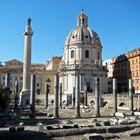
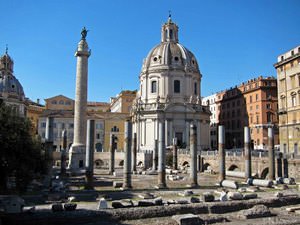
 Forum Romanum
was the political and religious center of Rome during the times of the Roman Empire. All most important decisions about executions and wars were made here. Later, after the fall of the Roman Empire, Forum Romanum was steadily forgotten and abandoned. Archeological excavations were started here only in the XIX century. The Forum is located approximately 10 meters below the level of Via dei Fori Imperiali Avenue that is located nearby. The remains of the Roman Empire still lie under this heavy traffic road.
Many tourists may find the habits of local residents quite unusual. Thus, when gallant and polite Italians gather in the crowd, they can create a real "crush". You may be surprised, but such … Open
Open
The Pantheon is one of the main temples of the city. It is located on Piazza della Rotonda. The Pantheon
was built in 27 BC, destroyed by fire, and then rebuilt in 125 AD. In the XVII century, Pope Boniface IV decided to place a church in the Pantheon. This is the main reason why the classical circular building with a colonnade in front of it managed to survive, unlike the majority of pagan temples. This place is also the location of graves of two famous Italians - Raphael and Victor Emmanuel II. The word "pantheon" means "dedicated to all gods".
 The Sistine Chapel.
 The Sistine Chapel was built between 1475 and 1483 by order of Pope Sixtus IV. It is located in the Vatican Museum. The Sistine Chapel is famous all over the world because of two reasons. Firstly, the chapel is the location of the famous frescoes by Michelangelo, The Last Judgment and The Creation of Adam (the famous two hands, which are about to touch each other). Secondly, by order of Pope Sixtus IV starting from the XV century the chapel hosts conclaves - secret meetings, during which cardinals of the Roman Catholic Church elect a new pope. When white smoke rises from the chimney of the chapel, this means that the choice is made.
Rome is a city with long history, so there’s no wonder why so many monuments of past epochs have survived here. The famous Arch of Constantine, the first mention of which relates to … Open
Open
The Basilica of Santa Maria Maggiore
is one of the largest and most significant churches of Rome. The basilica is located in Piazza di Santa Maria Maggiore. The church was founded in 431 AD by order of Pope Sixtus III. It is primarily famous for its luxurious carved wooden ceiling, during the construction of which was used gold that had been allegedly brought from America by Columbus. Visitors should also not forget to pay attention to beautiful mosaic pictures that depict various biblical scenes, as well as panels and the floor of the basilica.
 Villa Borghese.
 This is a museum of art
located in the same beautiful landscape park near the Spanish Stairs. The museum exhibits an extensive collection of works of art of the Renaissance period. Here visitors will be able to see paintings by Titian, Raphael, Rubens and Leonardo da Vinci, as well as sculptures by Bernini and Antonio Canova. 
This guide to iconic landmarks and sights of Rome is protected by the copyright law. You can re-publish this content with mandatory attribution: direct and active hyperlink to www.orangesmile.com.
City tours, excursions and tickets in Rome and surroundings
Reference information
Map of all shopping areas

Shopping streets in Rome
♥ Shopping area ' Via del Corso' Rome, 0.5 km from the center. On the map
Photo

♥ Shopping area ' Via Frattina' Rome, 0.5 km from the center. On the map
Photo
♥ Shopping area ' Via dei Condotti' Rome, 0.6 km from the center. On the map
Photo
♥ Shopping area ' Via Veneto' Rome, 0.9 km from the center. On the map
Photo
♥ Shopping area ' Via del Babuino' Rome, 1 km from the center. On the map
Photo
Map of all castles
Survived castles around Rome
♥ Castle 'Gioia Sannitica Castle' Gioia Sannitica, 1.3 km from the center. On the map
Photo
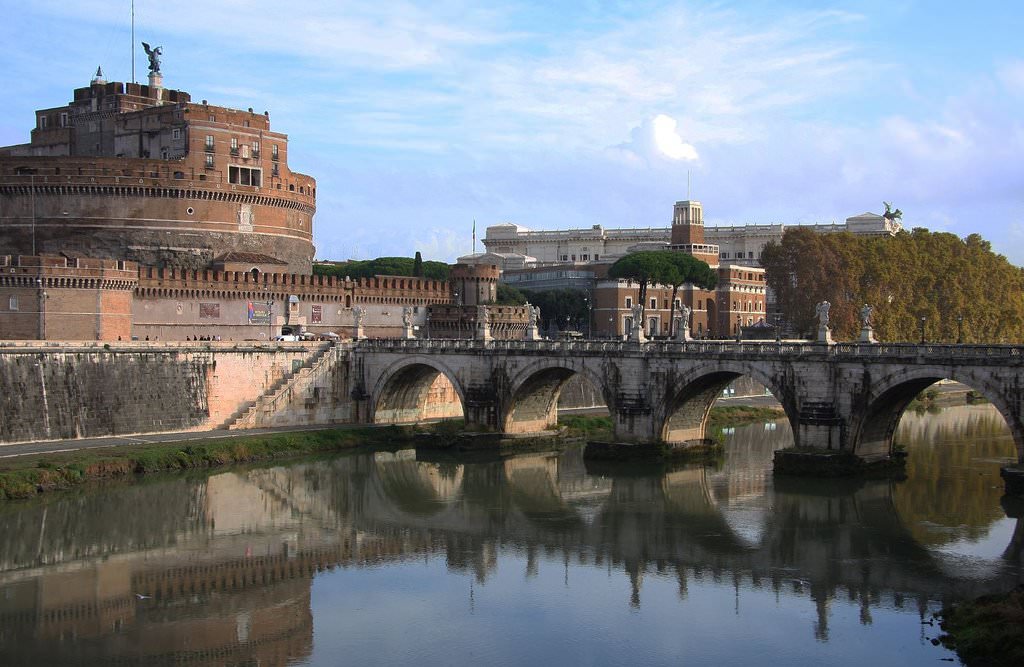
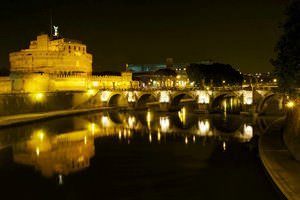
♥ Castle 'Castel Sant’Angelo' Rome, 1.4 km from the center. On the map
Photo
♥ Castle 'Casal de’ Pazzi' Rome, 7.7 km from the center. On the map
Photo
♥ Castle 'Castelseprio Castle' Castelseprio, 10.1 km from the center. On the map
Photo
♥ Castle 'Castello della Magliana' Rome, 10.3 km from the center. On the map
Photo
Map of all parks
National and city parks around Rome
♥ Regional Municipal Park 'La ENEA' , 25.9 km from the center. On the map
Photo
♥ National Park 'Parco nazionale del Circeo' , 79.5 km from the center. On the map
Photo
♥ National Park 'Parco nazionale del Gran Sasso e Monti della Laga' , 106.3 km from the center. On the map
Photo
♥ National Park 'Parco nazionale dei Monti Sibillini' , 124.3 km from the center. On the map
Photo
Map of all art museums
Art galleries in Rome and around
♥ Art museum 'Galleria Colonna' Rome, 0.2 km from the center. On the map
Photo
♥ Art museum 'Doria Pamphilj Gallery' Rome, 0.3 km from the center. On the map
Photo
♥ Art museum 'Palazzo delle Esposizioni' Rome, 0.6 km from the center. On the map
Photo
♥ Art museum 'Palazzo Barberini' Rome, 0.7 km from the center. On the map
Photo
♥ Art museum 'Capitoline Museums' Rome, 0.8 km from the center. On the map
Photo
Sights around Rome from our guide 'Extreme places on Earth'
The Catacombs of San Sebastiano
From the series “ Survived Artifacts of Early Christian Civilization”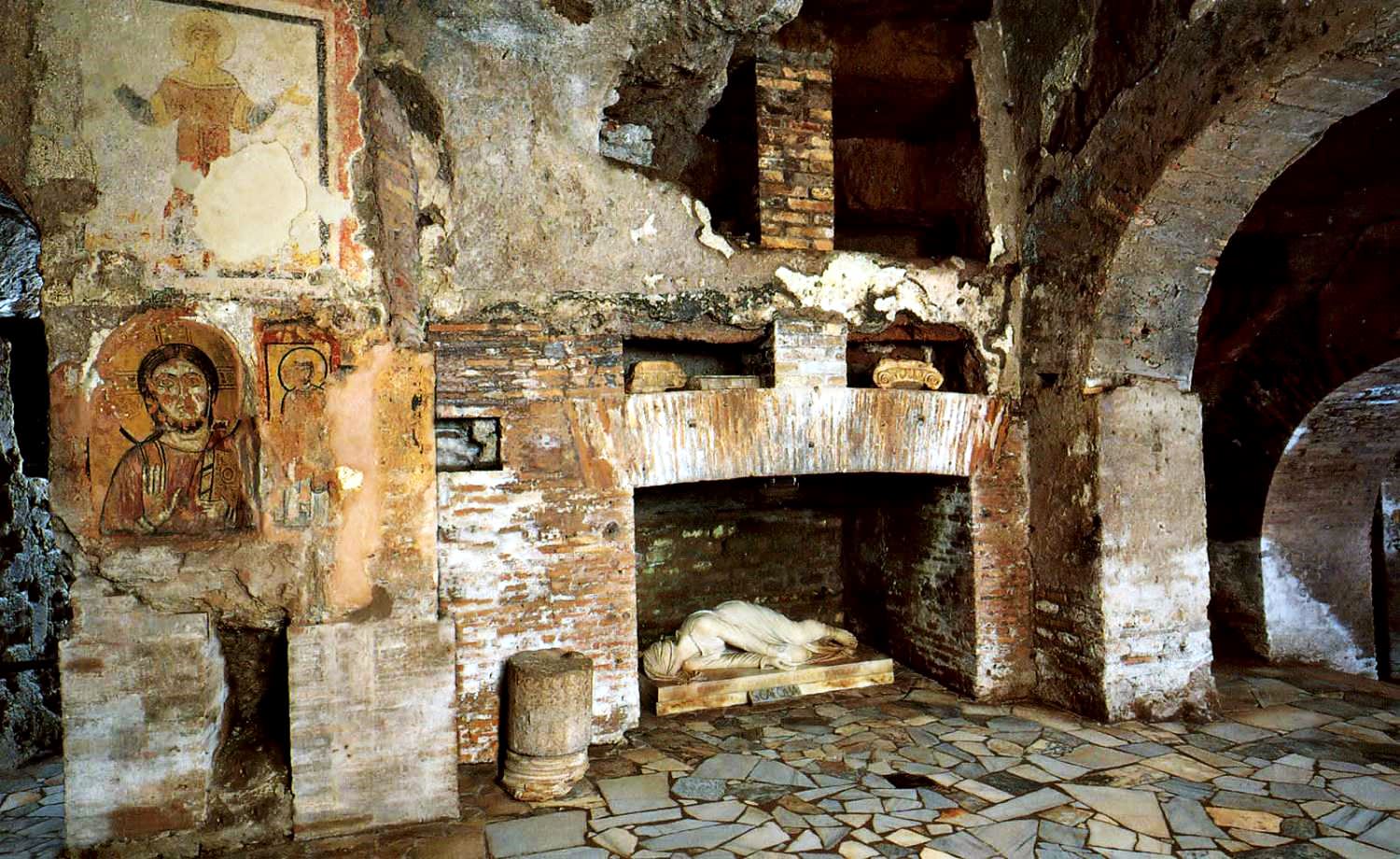
Check on the map: Distance from Rome center - 5.6 km.
Many of these works of art belong to the 3 century. Visitors can admire them only with a guide. The catacombs have a length of several hundred meters. The place is very confusing, so usual visitors can get lost easily. Nearby there’s the amazing San Callisto dungeon characterized by the impressive scale and a variety of great religious artifacts. There is a papal crypt, where 9 pontiffs have been buried. The tomb of St. Cecilia is situated nearby. Amazing catacombs are real storehouses of Christian historical artifacts. …
Read further Distance from Rome center - 5.6 km.
Villa Madama
From the series “Famous unfinished buildings ”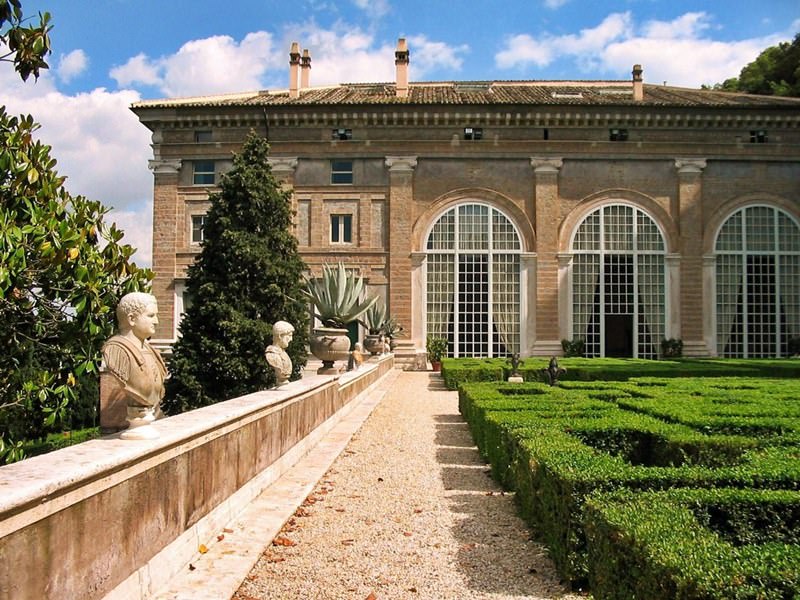
Check on the map: Distance from Rome center - 4.1 km.
Raffaello managed to work on the construction of the villa for only two years. He died in 1520. The disciples of the great master tried to continue his work. But they did not manage to realize all the unique plans of the teacher. The historic building belongs to the Spanish government today. Important official meetings are held in it. Guided tours of the extensive garden are available for tourists on some days off from various activities. You can visit this unique attraction only by prior arrangement. …
Read further Distance from Rome center - 4.1 km.
Archivum Secretum Apostolicum Vaticanum
From the series “Forbidden Construction Objects with Label "Access Denied"”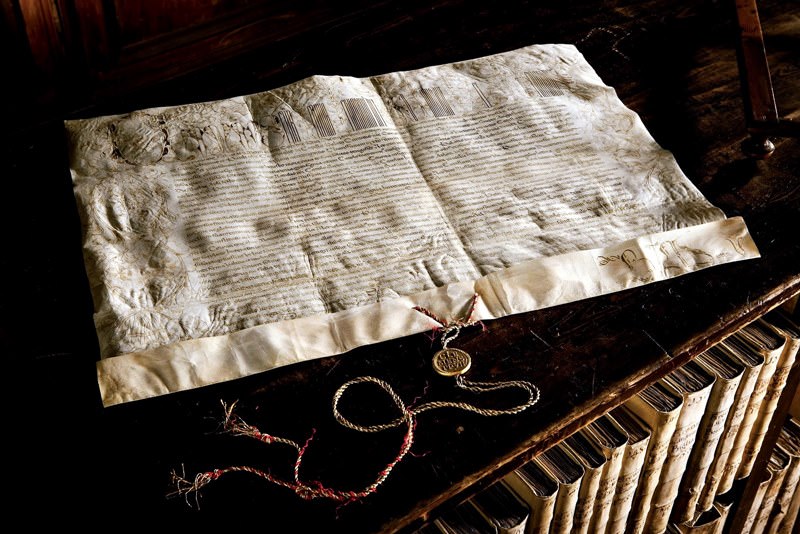
Check on the map: Distance from Rome center - 3.3 km.
According to official data, the archive was founded in the early 17th century, however, many believe that the repository was built several hundred years earlier. Scientists had access to the archive for the first time in 1881, and today some documents of the archive are periodically opened for general access. Each year, the Vatican Secret Archive is visited by about 1500 scientists from around the world, the only way to see its priceless artifacts is to do a scientific research and prove the church its scientific importance. …
Read further Distance from Rome center - 3.3 km.
Car rental on OrangeSmile.com


Search touristic sites on the map of Rome
 All about Rome, Italy - sightseeings, attractions, touristic spots, architecture, history, culture and cuisine. Prepare your trip together with OrangeSmile.com - find out the 'must see' things in Rome, which places to visit, which excursions to take, where the breathtaking views are waiting for you. Planning your trip with this travel guide will help your to get the most out of Rome in few days.