
 English
 Russian
 Nederlands
 Deutsch
 Español
 Français
 Türkçe


Travelling through Croatia - roads, airports, railway, bus transportation
 The network of highways in Croatia is well-developed with its total length spanning more than 29 thousand kilometers. There are even modern expressways; their length being a little over 850 thousand kilometers. Traveling within Croatia by car, be it personal or rented, is therefore quite comfortable. The streets in large cities are although quite narrow and very meandering in the mountainous regions. In settlements, the maximum permitted speed for motor vehicles is not more than 50 kilometers per hour. You can drive up to 90 kilometers per hour on the outskirts and up to 130 kilometers per hour on the highways. Taxis are also popular in the cities of Croatia. For parking, you have to pay about two and a half dollars. A ride on a taxi costs one dollar per kilometer. It is worth noting that in Croatia, there are a lot of cycling routes and motorists are very respectful towards riders.
Croatia is located next to Italy, the recognized capital of world fashion. However, shopping in this country is very different from Italian. Popular …
Read further
Read further
 Travel by train on average is 10-13% cheaper than buses. The railway passes through all the major cities of the country and connects through the most remote regions. The most active railway service is in the north of the country and the total length of the track is about three thousand kilometers. Only second class trains run within cities. For longer trips, you can choose express trains or comfortable, but expensive, first class trains. Trains run in strict accordance with the schedule. In Croatia, the air transport network is quite well developed. Airports are located practically in all major cities. There are air harbors exclusively for domestic routes, and also large international airports. Passengers are provided with excellent amenities such as restaurants, luggage storage, car and bicycle rental agencies, shops, boutiques and souvenir shops. You can connect from the airport to the city by taxi, car, or by municipal buses.
Main airports and avia transportation
Croatia is a deeply religious country. Therefore, holidays associated with religion, enjoy a special attitude. The main holiday of the Catholic world …
Read further
Read further
 Zadar Airport is one of the oldest in Croatia. It receives flights from most European countries. Its carrying capacity is in the range of three hundred thousand a year. It is located less than 10 kilometers from the city of Zadar. To get to the city’s bus station, you can use the buses of various carriers. It is worth noting that only this airport has a business terminal. You can find on its territory, special lounges for those who want to relax before or after the flight. In addition, there is a Duty Free shop, bank branches, a medical center, cafes and restaurants, and parking.
Railway, bus, water and other transport
 Croatia has excellent road coverage. There are also about 800 thousand kilometers of high-speed tracks. Therefore, traveling around the area by car is quite comfortable. Moreover, you can rent a car in any major city and even on the territory of international airports. You can find on all roads at the optimal distance petrol stations, cafes and shops. The maximum speed limit for driving within the city is 50 kilometers per hour. However, it should be noted that the streets in the cities are very narrow, so it is preferable to use a car only for long-distance travel. Outside the residential areas, you are allowed a speed limit of up to 90 kilometers per hour, but on high-speed roads the permissible value is 130 kilometers per hour. Talking on the phone while driving is strictly prohibited as it attracts a huge fine.
Croatia is a unitary republic, a democratic and social state. The power in the Republic belongs entirely to the people. The law of Croatia is based on …
Read further
Read further
 The city public transport system is composed of buses and trams. In large cities, the buses run every 20-30 minutes in various domestic directions. In other cities, buses run every hour. You can get acquainted with the schedule at the bus stations or on the official websites of carriers. The cost of traveling by buses varies from company to company. The comfort level is also different, so do not be surprised that for the same amount, you will experience absolutely different traveling conditions. Night trips cost more, the price depending on the city and destination. Tickets can be bought at roadside kiosks and shops, or at the park. However, the latter option will cost a little more.
Croatia in Yugoslavia was a fairly developed territorial unit. All Enterprises and Factories that functioned on its territory had the right to choose …
Read further
Read further

This article about transportation in Croatia is protected by the copyright law. You can re-use the content, but only under the condition of placement of an active link to www.orangesmile.com.
Fantastic City Tours and Excursions in Croatia
Country maps
Car rental on OrangeSmile.com
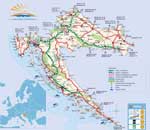
Map of cities


Croatia in photo stream
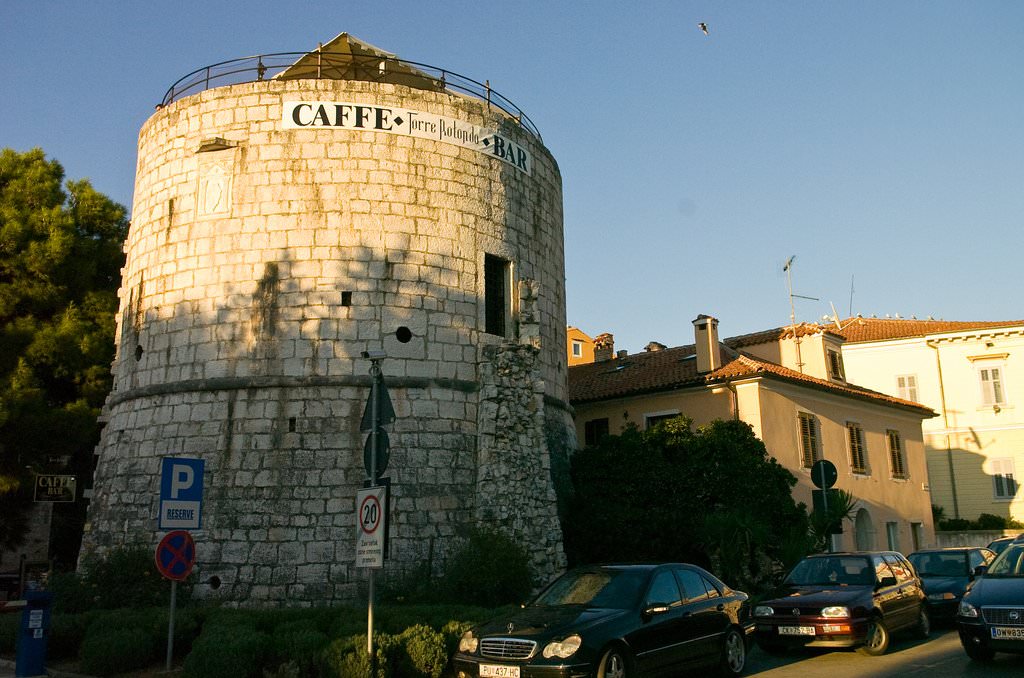


Travel advices for Croatia cities

Dubrovnik
3. Restaurants located in Old Town are the most expensive gastronomic establishments of the city. However, they differ by quite an original menu. Almost all elite institutions of the city are located here. 4. Best shops of the city are located in the Gruz port area. Here you can buy fresh seafood and best wine. Most shops and shopping malls accept payments by credit card. 5. If you want to rent a car, you will need a driver's license of the international class, and any credit card. … Read more 

Split
3. The city has a huge range of hotels and hotels of different classes. Budget travelers and those who are traveling in a big company have to pay attention to private apartments. You can rent them literally in every house. 4. Travelers who expect a rich excursion program have to buy a Split Card. It entitles you to free admission to a number of cultural venues. The cost of the card is about 5 euros. Many hotels give a card to their guests for free. 5. You can walk safely around central … Read more

Hvar
3. There are all kinds of accommodation options on the island, including fine hotels and modest budget hostels. It should be noted that many budget hotels are situated in the capital; it may sound interesting for thrifty travelers. 4. The island is dominated by restaurants that specialize in fish dishes. Fans of other culinary delights have to note that virtually every dining place offers classic European and international dishes, so it won’t be difficult to find a suitable place to rest. … Read more

Zadar
3. Tram remains the most common form of public transport. The cost of a ride is about $0.65. Tourists who plan to travel a lot around the city are recommended to purchase a special pass. It costs approximately $1.75 and is valid for one day. 4. All taxis are equipped with counters. The cost of a ride at night and on weekends can be 20% higher than on weekdays. As a rule, a trip in the city costs not more than 8 dollars, and in the case of a ride to the country the price is better to be … Read more

Zagreb
3. Despite the fact that the city is very quiet and is distinguished by low level of crime, travelers should not forget to remain careful in public places and should monitor their belongings closely. Do not go to remote areas of the city alone, and do not take large sums of money and other valuable items without any particular need. 4. In order to be respected by the locals, make sure to learn a few phrases in their native language. A significant part of the local population is fluent in … Read more

Porec
3. Motor-car enthusiasts who are going to get to the neighboring cities need to remember that the majority of roads are paying. At the same time quality of the local roads are excellent, so this fact makes travels more comfortable and safe. 4. It is recommended to buy food in one of the local markets. As a rule farmers from the nearest towns work there, so their product is always fresh and qualitative. Superstores suggest the wide assortment of product, but their prices are more expensive than … Read more

Rovinj
3. Shops are usually open at 8 am at the latest, and work till 8 pm. Sundays and Saturdays are commonly the shortened working days, some small shops can be closed these days. During the tourist season shops can change their working schedule fitting in tourist demands. 4. City guests have an opportunity to rent a car. To rent a vehicle one will need international driving license. Some renting centers impose age limits. Thus persons under 21 years old or persons with less than a year of driving … Read more

Opatija
3. The hottest months of the year are considered to be July and August. This period of the year will be favorable for beach leisure fans. Opatija features favorable climate as even in winter the average temperature does not go below 10C. 4. Ladies should avoid city exploration alone as in this case they should be ready to get into focus of attention of local men. 5. Many restaurants and gambling houses require a dress code that is why before paying a visit to an upscale establishment one … Read more