











Sightseeing in Rio de Janeiro - what to see. Complete travel guide
 Rio de Janeiro is a city with a long and rich history. After a short period of French reign, the city was occupied by the Portuguese in 1567. Initially, the city grew very slowly, but then gold was found in Brazil. From 1763 to 1960, Rio de Janeiro was the capital of the country. However, in 1960 this title was given to Brasilia. In the end of the XIX century, thanks to mass immigration from Europe and large influx of people from villages, the population of Rio started growing quickly. This was the period when such famous areas of Rio as Copacabana and Ipanema started appearing. However, this was also the time for the occurrence of «favelas» - poor peasant areas.
Christ the Redeemer, Teatro Municipal, Candelaria Church, as well as many others, they all become the world's cultural heritage objects and remain as iconic monuments for Rio de Janeiro …  Open
Open
Open
Beach life in Rio is a true form of art, but it can be mastered without any problems. Prove yourself and don’t forget to look at others – this is the motto of world-famous beaches of Copacabana and Ipanema. Perhaps, the second is even more important. This is the reason why many cariocas come to the beach. Of course, this doesn’t prevent them from enjoying the sun, listening to music, surfing, playing football or volleyball... Copacabana is the most popular beach in the city. The largest hotels of Rio are located here. The international elite usually prefers Ipanema
 and Leblon, posh suburbs of Rio. However, everyone is welcome to visit these beaches! Endless boulevards, which are located along the beaches, are full of life and music. You will always find a huge number of different bars and restaurants there. Copyright www.orangesmile.com
Besides comfortable beaches, travelers with children will find many interesting entertainments in Rio. This city is simply perfect for active pastime. Flamengo Park remains one of the most … Open
Open
The very top of Corcovado Mount
has become the location of a huge statue of Jesus. The statue is known as the symbol of Rio de Janeiro. Jesus, who hovers over the city with his arms stretched, is visible from any part of Rio. It is possible to get to Corcovado Mount by train, minibus or taxi. The view, which you will see from the top, is truly unforgettable and very beautiful. There are several cafes, a small museum and even a chapel at the foot of the statue. The train goes from Rua Cosmo Velho every half an hour, from 8.30 to 18.15. If you go back on the last train, you will be able to enjoy a fantastic view of the evening Rio.
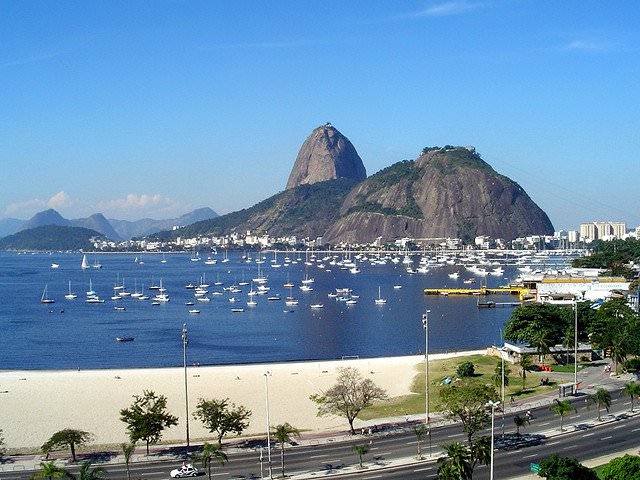
 Pao de Acucar.
 Pao de Acucar Mountain (pão de açucar means “sugar head” in Portuguese)
is another place with a beautiful panoramic view of the city and the bay (Bahia de Guanabara). This is a high rocky mountain to the south of Rio. There is one more mountain at approximately a half of the way to the top of Pao de Acucar. This is Urca Mountain . This mountain is the location of numerous restaurants and small galleries. In the evening the mount often becomes the venue of open air concerts. You can get to the top of Pao de Acucar by cable road or on foot. However, if you choose the latter, you must prepare for a difficult path. "Sugar head" is a favorite place of climbers, and there are tens of climbing routes there. You can also choose one more way to see Pao de Acucar and its neighborhoods - make a helicopter flight.
Dining facilities of Rio are always ready to amaze its visitors with unusual dishes. Brazilian cuisine is one of the spiciest and most exotic cuisines in the world, so tourists are very … Open
Open
 Santa Teresa District.
 The district of Santa Theresa
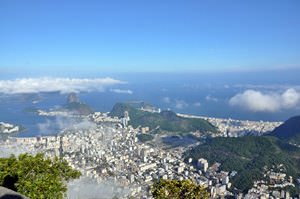
is located outside the center of Rio on several cool hills. This is an old colonial quarter, a bohemian place, a haven for artists and intellectuals. You can easily spend a night or more here, staying in one of numerous hotels and hostels opened in historic buildings. In the evening, the main square of the quarter Largo do Guimaraes is filled with music and fun. It is also not difficult to reach Santa Teresa Square from the center by a small old tram, which starts its route from a stop located in front of PetroBras .
Local residents are very smiling, cheerful and friendly people. They are very responsive and are always ready to help, so foreigners will literally feel in Rio like at home. The city is home … Open
Open
, located in the center of Rio. The paths, that cross the hilly rainforest, lead along waterfalls and open spaces with beautiful panoramic views. This is a perfect place to have a picnic or dine at a restaurant. In order not to get lost, it is better to follow main routes or hire a guide who will tell you everything about plants and animals, as well as rare reptiles that live there.
 Maracana Stadium.
 Maracaña Stadion
is one of the biggest stadiums in the world. Its capacity is approximately 120 000 spectators. Tourists are welcome to visit the stadium and the local museum together with a guide. Residents of Rio are passionate fans. You can feel this if you come to a football match. Not just a game itself is a special performance; fans make each game special, supporting their favorite teams passionately and performing samba. Tickets to football matches should be bought a day before in one of ticket selling offices in the city. Besides this, there are special tours that include transportation from your hotel and good seats in the stadium.
Rio is home to numerous historical monuments. The city features some really unique natural attractions and widest choice of museums and galleries. An excursion to the rock called "Sugar … Open
Open
It is simply impossible to find more spectacular carnivals anywhere else in the world than in Rio de Janeiro. The main carnival is five days of complete merriment without any limits. In February, the whole city turns into one big area for the holiday. Shows are arranged simply everywhere. Multiple people, who play music, sing and dance can be found simply everywhere. By the way, everyone is welcome to join these groups. Various hotels and clubs organize their own costume balls, ranging from completely boundless parties to chic evenings.

This guide to iconic landmarks and sights of Rio de Janeiro is protected by the copyright law. You can re-publish this content with mandatory attribution: direct and active hyperlink to www.orangesmile.com.
City tours, excursions and tickets in Rio de Janeiro and surroundings
Reference information
Map of all shopping areas

Shopping streets in Rio de Janeiro
♥ Shopping area ' Leblon' Rio de Janeiro, 9.4 km from the center. On the map
Photo

Map of all castles
Survived castles around Rio de Janeiro
♥ Castle 'Castelo Mourisco' , 3 km from the center. On the map
Photo
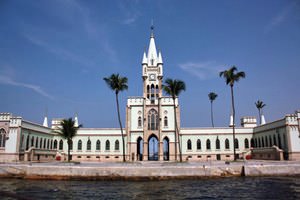
♥ Castle 'Ilha Fiscal' , 6.8 km from the center. On the map
Photo
♥ Castle 'Castelo de Itaipava' , 61 km from the center. On the map
Photo
Map of all parks
National and city parks around Rio de Janeiro
♥ Park 'Parque Nacional Da Tijuca' , 6.8 km from the center. On the map
Photo
♥ Park 'Parque Natural Municipal José Guilherme Merquior' , 8.3 km from the center. On the map
Photo
♥ Park 'Parque Natural Municipal Da Catacumba' , 8.6 km from the center. On the map
Photo
♥ Park 'Parque Natural Municipal Da Cidade' , 8.6 km from the center. On the map
Photo
♥ Park 'Parque Natural Municipal Do Jardim Do Carmo' , 8.9 km from the center. On the map
Photo
Map of all art museums
Art galleries in Rio de Janeiro and around
♥ Art museum 'Museu Nacional de Belas Artes' Rio de Janeiro, 6 km from the center. On the map
Photo
♥ Art museum 'Museum of Modern Art Rio de Janeiro(MAM)' Rio de Janeiro, 6.5 km from the center. On the map
Photo
♥ Art museum 'Niterói Contemporary Art Museum' Niterói, 11 km from the center. On the map
Photo
Sights around Rio de Janeiro from our guide 'Extreme places on Earth'
Copacabana Beach
From the series “Dangerous and Treacherous Beaches That Can Be Lethal”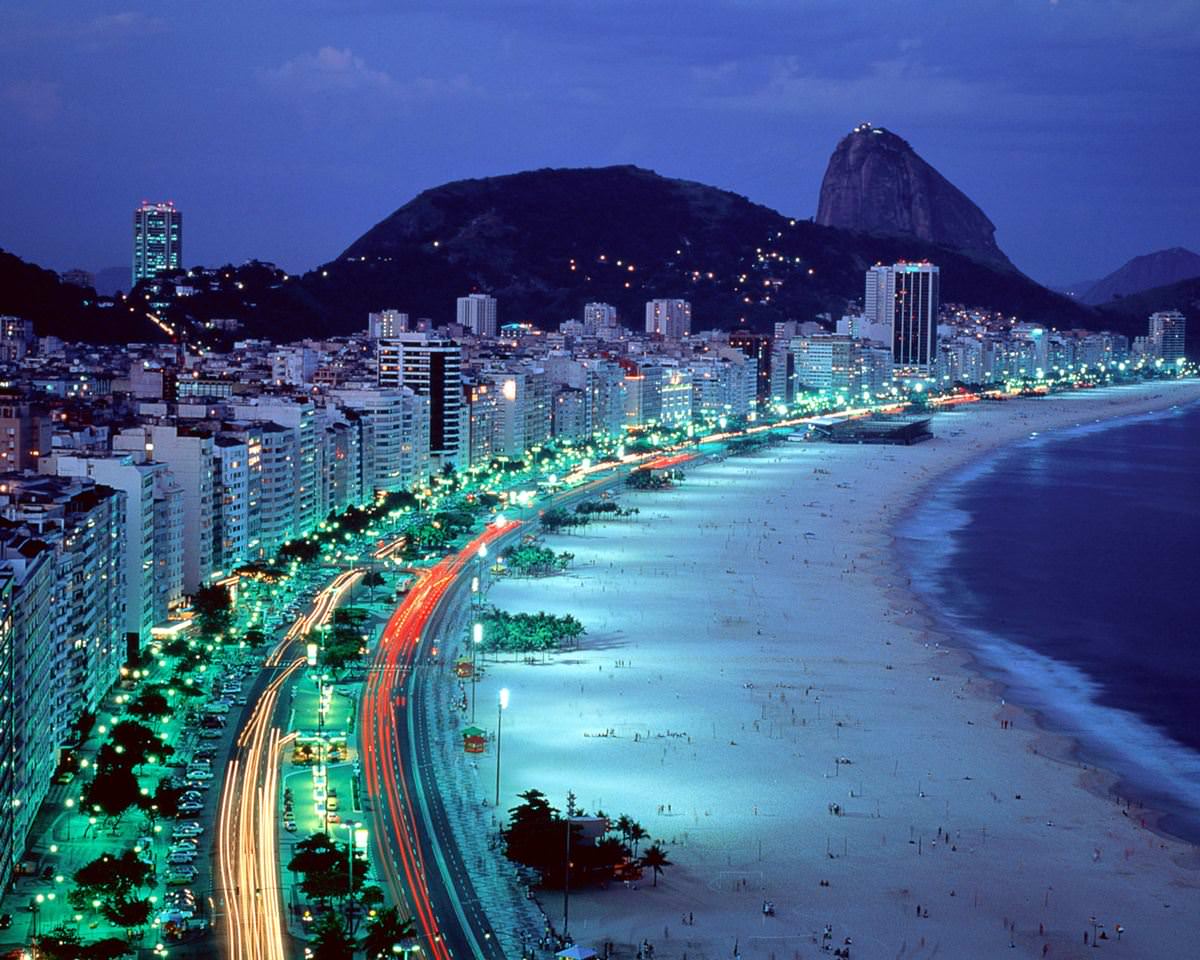
Check on the map: Distance from Rio de Janeiro center - 9.2 km.
Drugs, prostitution, numerous crooks and bags - so are the distinctive features of the popular Brazilian beach. If some precautions are taken, the rest on the coast can be quite safe. Resting on the beach, you should not talk with unknown people and do not close business with them. On the beach you should take as little valuable things as possible and never leave them unattended. …
Read further Distance from Rio de Janeiro center - 9.2 km.
Christ The Redeemer
From the series “15 Unofficial Man-Made Wonders of the World”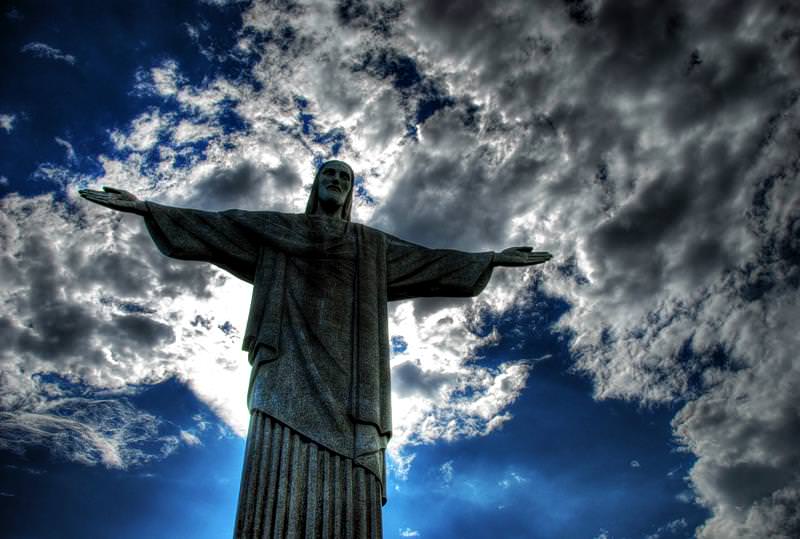
Check on the map: Distance from Rio de Janeiro center - 6.4 km.
Since opening of the statue, one of its main features was the unique lighting system. Many people come here at nightfall to admire lights. They create a sensation as if the statue shines from within. Also, not all travelers are aware of the fact that the pedestal of the statue houses the small chapel of Nossa Aparecida. It operates the same working hours as the landmark itself. Everyone can visit this chapel. Travelers who choose to come to the famous statue will do the hard way. First, they have to go up via electric train and then climb the legendary Caracol staircase that has 220 steps. …
Read further Distance from Rio de Janeiro center - 6.4 km.
Car rental on OrangeSmile.com

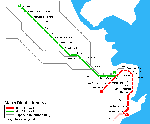
Search touristic sites on the map of Rio de Janeiro
 All about Rio de Janeiro, Brazil - sightseeings, attractions, touristic spots, architecture, history, culture and cuisine. Prepare your trip together with OrangeSmile.com - find out the 'must see' things in Rio de Janeiro, which places to visit, which excursions to take, where the breathtaking views are waiting for you. Planning your trip with this travel guide will help your to get the most out of Rio de Janeiro in few days.