

Rio de Janeiro Hotels
Search hotels
near your address
on Rio de Janeiro map
near your address
on Rio de Janeiro map
The presented room availability, rates and discounts are actual and final for all our 694 hotels in Rio de Janeiro.
BEST PRICE GUARANTEE
500.000+ SATISFIED CLIENTS
CHOICE OF 300.000 HOTELS
BOOKING IN 3 SIMPLE STEPS
INSTANT CONFIRMATION
Best hotels in Rio de Janeiro, Brazil

rates from
BRL 778.68
Address: Avenida Vieira Souto, 460, Rio de Janeiro
9.2 km from Rio de Janeiro center (hotel on the map)
Hotel rating from 398 guests: 8.4
8.4
9.2 km from Rio de Janeiro center (hotel on the map)
Hotel rating from 398 guests:
 8.4
8.4
The resort-hotel situated in one of the most prestigious areas of Rio, attracting fans of high quality rest. Richly decorated rooms with a view on the ocean and a wide choice of entertainments. … Prices, discounts & booking

rates from
BRL 556.07
Address: Avenida Atlântica, 2964, Rio de Janeiro
8.3 km from Rio de Janeiro center (hotel on the map)
Hotel rating from 334 guests: 7.4
8.3 km from Rio de Janeiro center (hotel on the map)
Hotel rating from 334 guests:
7.4
The hotel having high-tech rooms, located on the quay of Copacabana. An attractive lobby bar with a wide choice of treats and… Prices, discounts & booking

rates from
BRL 469.67
Address: Avenida Atlântica, 3264, Rio de Janeiro
8.5 km from Rio de Janeiro center (hotel on the map)
Hotel rating from 1560 guests: 7.5
8.5 km from Rio de Janeiro center (hotel on the map)
Hotel rating from 1560 guests:
7.5
A chic hotel with a view on the sights, perfect for family rest. A wellness centre and a… Prices, discounts & booking

rates from
BRL 342
Address: Rua Duvivier, 82, Rio de Janeiro
7.5 km from Rio de Janeiro center (hotel on the map)
Hotel rating from 1292 guests: 7.9
7.5 km from Rio de Janeiro center (hotel on the map)
Hotel rating from 1292 guests:
7.9
A comfortable hotel with a spectacular lobby bar and an excellent restaurant of national cuisine. Elegant furniture and comfortable beds in all the rooms. … Prices, discounts & booking

rates from
BRL 275.5
Address: Avenida Presidente Vargas, 392, Rio de Janeiro
3.1 km from Rio de Janeiro center (hotel on the map)
Hotel rating from 243 guests: 7.9
3.1 km from Rio de Janeiro center (hotel on the map)
Hotel rating from 243 guests:
7.9
A respectable hotel located in a beautiful skyscraper with glass facade. A large furnished terrace on the roof, additional services for business travellers. … Prices, discounts & booking

rates from
BRL 208
Address: Rua Santo Amaro, 11 - Glória, Rio de Janeiro
3.9 km from Rio de Janeiro center (hotel on the map)
Hotel rating from 253 guests: 8.0
3.9 km from Rio de Janeiro center (hotel on the map)
Hotel rating from 253 guests:
8.0
A picturesque hotel located close to the Museum of Modern Art. Luxurious rooms with upholstered furniture, decorated in pale… Prices, discounts & booking

rates from
BRL 290
Address: Rua Correia Dutra, 31, Rio de Janeiro
4.5 km from Rio de Janeiro center (hotel on the map)
Hotel rating from 578 guests: 8.0
4.5 km from Rio de Janeiro center (hotel on the map)
Hotel rating from 578 guests:
8.0
A well-equipped hotel suitable for stays with children. Own business centre with free Wi-Fi, in a few minutes drive to famous beaches and restaurants. … Prices, discounts & booking

rates from
BRL 240
Address: Rua Ferreira Viana, 29, Rio de Janeiro
4.5 km from Rio de Janeiro center (hotel on the map)
Hotel rating from 706 guests: 8.3
4.5 km from Rio de Janeiro center (hotel on the map)
Hotel rating from 706 guests:
8.3
A charming hotel in the heart of the city suitable for active holidays. Pleasant rooms decorated in cream colours and equipped with modern appliances. … Prices, discounts & booking

rates from
BRL 869
Address: Rua Almirante Alexandrino, 660, Rio de Janeiro
3 km from Rio de Janeiro center (hotel on the map)
Hotel rating from 102 guests: 8.5
3 km from Rio de Janeiro center (hotel on the map)
Hotel rating from 102 guests:
8.5
The hotel with an original tropical interior located in the historical district of the city. An outdoor swimming pool and a first-class spa with massage rooms. … Prices, discounts & booking

rates from
BRL 300
Address: Rua Barata Ribeiro, 547, Rio de Janeiro
7.8 km from Rio de Janeiro center (hotel on the map)
Hotel rating from 410 guests: 8.0
7.8 km from Rio de Janeiro center (hotel on the map)
Hotel rating from 410 guests:
8.0
The 4-star Benidorm Palace Hotel is situated only 3 blocks from Copacabana Beach and Atlantica Avenue, with its popular bars and restaurants. … Prices, discounts & booking
Rio de Janeiro hotels by categories
Travel guide to Rio de Janeiro, Brazil
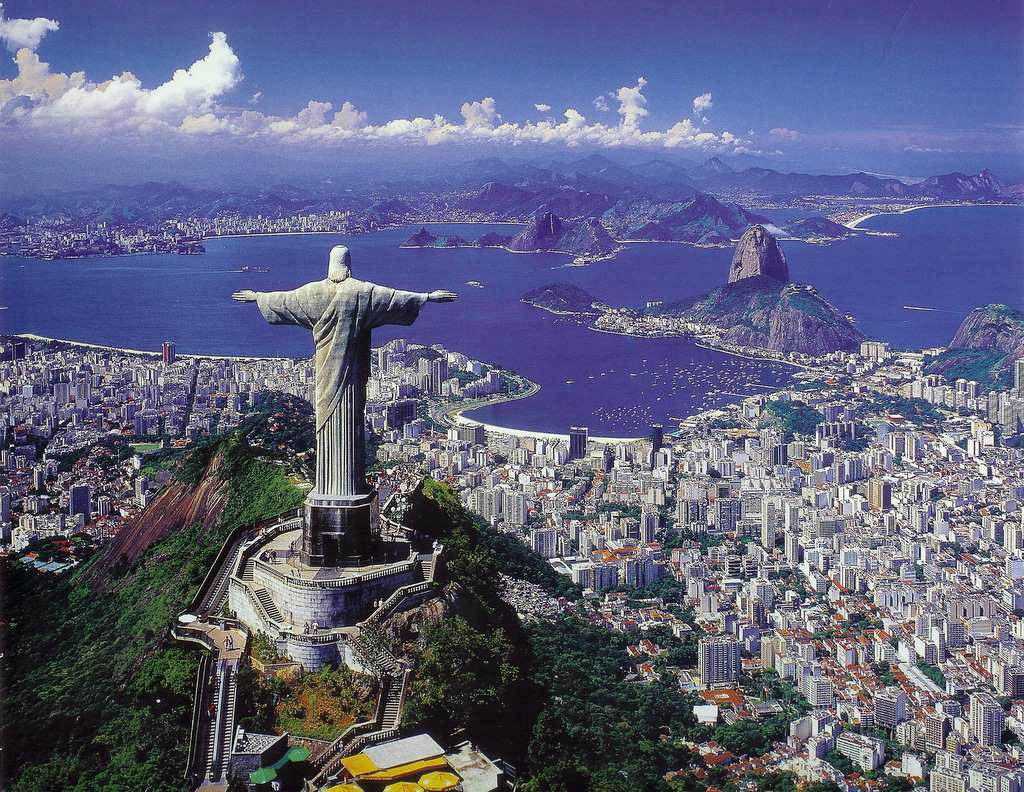

Beach life in Rio is a true form of art, but it can be mastered without any problems. Prove yourself and don’t forget to look at others – this is the motto of world-famous beaches of Copacabana and Ipanema. Perhaps, the second is even more important. This is the reason why many cariocas come to the beach. Of course, this doesn’t prevent them from enjoying the sun, listening to music, surfing, playing football or volleyball... Copacabana is the most popular beach in the city. The largest hotels of Rio are located here. The international elite usually prefers Ipanema and Leblon, posh suburbs of Rio. However, everyone is welcome to visit these beaches! Endless boulevards, which are located along the beaches, are full of life and music. You will always find a huge number of different bars and restaurants there.
The Statue of Jesus.
The very top of Corcovado Mount has become the location of a huge statue of Jesus. The statue is known as the symbol of Rio de Janeiro. Jesus, who hovers over the city with his arms stretched, is visible from any part of Rio. It is possible to get to Corcovado Mount by train, minibus or taxi. The view, which you will see from the top, is truly unforgettable and very beautiful. There are several cafes, a small museum and even a chapel at the foot of the statue. The train goes from Rua Cosmo Velho every half an hour, from 8.30 to 18.15. If you go back on the last train, you will be able to enjoy a fantastic view of the evening Rio.
Continue reading
This article about Rio de Janeiro is written by the orangesmile.com editorial team and is protected by the copyright law. The article can only be re-used with a direct link to www.orangesmile.com
Hotels in cities & airports nearby Rio de Janeiro
CITIES:
Niteroi hotels - 14.3 km
Petropolis hotels - 43.6 km
Itaipava hotels - 59.2 km
Saquarema hotels - 75.2 km
Show more cities
Niteroi hotels - 14.3 km
Petropolis hotels - 43.6 km
Itaipava hotels - 59.2 km
Saquarema hotels - 75.2 km
Show more cities
AIRPORTS:
Santos Dumont Airport SDU - 7.4 km
Galeao Airport GIG - 10.2 km
Aeroclub Airport QNV - 28.9 km
Umberto Modiano Airport BZS - 131 km
Santos Dumont Airport SDU - 7.4 km
Galeao Airport GIG - 10.2 km
Aeroclub Airport QNV - 28.9 km
Umberto Modiano Airport BZS - 131 km
Our recent articles related to Rio de Janeiro hotels
 Asia Pacific and both Americas show best RevPAR in 2011
... in this region reached RevPAR of US$62.79. Hotels in Sao Paulo and Rio de Janeiro feature biggest growth of RevPAR in the Americas (+ 27.8% and +21.1% respectively). The revenues of European accommodations are more modest – here RevPAR grew by 3.5% in December 2011. The ... Read complete news
The most expensive hotel rooms in the world
... The top ten most expensive hotels are located in Dubrovnik (Croatia), Rio de Janeiro, Bali, Paris,Venice, London and Moscow. However, there are some international destinations like Reykjavik, Abu Dhabi or Dubai which experienced a price drop during the first half of the year. ... Read complete news
Common Questions
Data securityBooking steps
Credit cards
Money blocking
Booking confirmation
Booking cancellation
Room prices
Hotel options

customer care
+31 4040 15044
support@orangesmile.com
We Accept


Top destinations

Beirut
70 hotels
70 hotels

Cancun
62 hotels
62 hotels

Florence
475 hotels
475 hotels

Hvar
41 hotels
41 hotels

Lima
123 hotels
123 hotels

Miami
60 hotels
60 hotels

Paphos
61 hotels
61 hotels

St Petersburg
313 hotels
313 hotels

Stuttgart
117 hotels
117 hotels

Zaragoza
66 hotels
66 hotels
Our Hotel News
Hilton builds third luxury hotel in Kyoto
Hilton has announced that it will soon begin a project to build a new hotel in Kyoto. It will be located in the heart of the city, in the prestigious...
Read further
2022-04-22
The Kingdom of Saudi Arabia has ambitious plans regarding the historic city of Diriyah that is located only 15 minutes from the central part of Riyadh....
Read further
2021-12-26