

Abu Dhabi Hotels
Search hotels
near your address
on Abu Dhabi map
near your address
on Abu Dhabi map
The presented room availability, rates and discounts are actual and final for all our 109 hotels in Abu Dhabi.
BEST PRICE GUARANTEE
500.000+ SATISFIED CLIENTS
CHOICE OF 300.000 HOTELS
BOOKING IN 3 SIMPLE STEPS
INSTANT CONFIRMATION
Best hotels in Abu Dhabi, United Arab Emirates

rates from
AED 280
Address: Zayed The 1 St Street, Abu Dhabi
3.5 km from Abu Dhabi center (hotel on the map)
Hotel rating from 222 guests: 8.0
8.0
3.5 km from Abu Dhabi center (hotel on the map)
Hotel rating from 222 guests:
 8.0
8.0
Elegant apartments in the city center suit well for large companies. Distinctive features: properly equipped rooms, there is even a washing machine, a pool on top a roof, transfer to the airport. … Prices, discounts & booking

rates from
AED 699
Address: Mouaskar Al Nahyan , Muroor Road, Abu Dhabi
1.8 km from Abu Dhabi center
Hotel rating from 233 guests: 8.5
1.8 km from Abu Dhabi center
Hotel rating from 233 guests:
8.5
All apartments and studios are decorated in soft, warm tones. Each apartment offers a spacious living room with sofa and a kitchenette complete with dining area. … Prices, discounts & booking

rates from
AED 403.2
Address: Tourist Club Area, Abu Dhabi
3.8 km from Abu Dhabi center (hotel on the map)
Hotel rating from 505 guests: 7.4
3.8 km from Abu Dhabi center (hotel on the map)
Hotel rating from 505 guests:
7.4
First-class hotel for families. There is a private beach with perfect sand and clear water, a complete range of accessories, a dressing gown and white cottony towels in the bathroom. … Prices, discounts & booking

rates from
AED 525
Address: Khalifa Street, Abu Dhabi
3.3 km from Abu Dhabi center (hotel on the map)
Hotel rating from 532 guests: 8.5
3.3 km from Abu Dhabi center (hotel on the map)
Hotel rating from 532 guests:
8.5
A turning restaurant is situated on the roof of this extravagant hotel. Spacious and clean rooms, comfortable beds, friendly staff, stunning views of the Persian Gulf. … Prices, discounts & booking

rates from
AED 540
Address: Tourist Club Area, Abu Dhabi
3.5 km from Abu Dhabi center (hotel on the map)
Hotel rating from 712 guests: 8.6
3.5 km from Abu Dhabi center (hotel on the map)
Hotel rating from 712 guests:
8.6
The Beach Rotana hotel features spacious and elegantly decorated rooms and suites. Some rooms have balconies with sea views. … Prices, discounts & booking

rates from
AED 315
Address: Corniche Road, Abu Dhabi
2.6 km from Abu Dhabi center (hotel on the map)
Hotel rating from 398 guests: 7.4
2.6 km from Abu Dhabi center (hotel on the map)
Hotel rating from 398 guests:
7.4
An imposing hotel is a few minutes walk from Corniche. Spacious, well-furnished rooms, plenty of space for luggage and clothes, a safe’s available, friendly staff. … Prices, discounts & booking

rates from
AED 550
Address: Corniche Road, Salam Street, Abu Dhabi
3.7 km from Abu Dhabi center (hotel on the map)
Hotel rating from 523 guests: 8.1
3.7 km from Abu Dhabi center (hotel on the map)
Hotel rating from 523 guests:
8.1
A gorgeous hotel-resort in the heart of Abu Dhabi, having its own private beach in the picturesque lagoon. First-class beauty salon, a nice pool bar, free parking. … Prices, discounts & booking

rates from
AED 314
Address: Airport Road, Abu Dhabi
0.7 km from Abu Dhabi center
Hotel rating from 507 guests: 8.4
0.7 km from Abu Dhabi center
Hotel rating from 507 guests:
8.4
The Abu Dhabi Bus Station is a 5-minute walk from Centro Al Manhal by Rotana. Al Wahda Mall is just 2 minutes' walk away. … Prices, discounts & booking

rates from
AED 263.25
Address: Electra Street, Abu Dhabi
2.5 km from Abu Dhabi center (hotel on the map)
Hotel rating from 475 guests: 7.3
2.5 km from Abu Dhabi center (hotel on the map)
Hotel rating from 475 guests:
7.3
An imposing hotel in the business area of Abu Dhabi. A wide selection of TV channels, in-room teapot and coffee and tea bags, free Wi-Fi, attentive and polite staff. … Prices, discounts & booking

rates from
AED 375
Address: Tourist Club Area, Abu Dhabi
4.2 km from Abu Dhabi center (hotel on the map)
Hotel rating from 388 guests: 8.4
4.2 km from Abu Dhabi center (hotel on the map)
Hotel rating from 388 guests:
8.4
A comfortable apart-hotel near the seaside and Abu Dhabi mall. Spacious rooms, decorated with taste, free and high speed Wi-Fi, attentive staff. … Prices, discounts & booking
Abu Dhabi hotels by categories
Travel guide to Abu Dhabi, United Arab Emirates
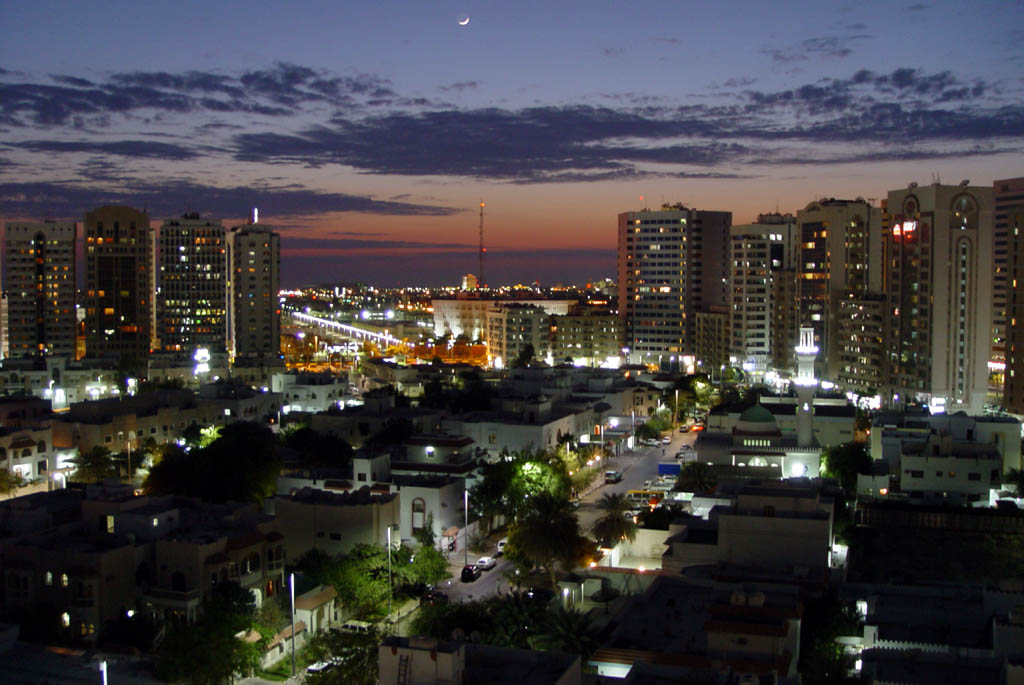

The city's downtown district is stretched along the Corniche, and here you can find the world's most expensive top-rate hotels, such as the luxurious and renowned Emirates Palace Hotel, and VIP-class dining spots. From the hotel, the numerous small sandy islands are readily observable. Today, many of them have been turned into construction sites.
The Saadiyat Island is actually the apotheosis of this full-blown islet transformation. This grand twenty-seven-billion-dollar project is aimed at the formation of a fantastic cultural area with performance centers, museums and art galleries.
Continue reading
This article about Abu Dhabi is written by the orangesmile.com editorial team and is protected by the copyright law. The article can only be re-used with a direct link to www.orangesmile.com
Hotels in cities & airports nearby Abu Dhabi
CITIES:
Ghantoot hotels - 69 km
Al Marfa hotels - 97.8 km
Madinat Zayid hotels - 113.4 km
Dubai hotels - 127 km
Show more cities
Ghantoot hotels - 69 km
Al Marfa hotels - 97.8 km
Madinat Zayid hotels - 113.4 km
Dubai hotels - 127 km
Show more cities
AIRPORTS:
Bateen Airport AZI - 10.2 km
Abu Dhabi Airport AUH - 29 km
Al Dhafra Airport DHF - 30.4 km
Al Maktoum International Airport DWC - 94.1 km
Bateen Airport AZI - 10.2 km
Abu Dhabi Airport AUH - 29 km
Al Dhafra Airport DHF - 30.4 km
Al Maktoum International Airport DWC - 94.1 km
Common Questions
Data securityBooking steps
Credit cards
Money blocking
Booking confirmation
Booking cancellation
Room prices
Hotel options

customer care
+31 4040 15044
support@orangesmile.com
We Accept


Top destinations

Aix-Provence
42 hotels
42 hotels

Bilbao
43 hotels
43 hotels

Chania
64 hotels
64 hotels

Garmisch-Par.
45 hotels
45 hotels

Izmir
52 hotels
52 hotels

Los Angeles
134 hotels
134 hotels

Muscat
46 hotels
46 hotels

Philadelphia
51 hotels
51 hotels

San Diego
109 hotels
109 hotels

Tenerife
240 hotels
240 hotels
Our Hotel News
Hilton builds third luxury hotel in Kyoto
Hilton has announced that it will soon begin a project to build a new hotel in Kyoto. It will be located in the heart of the city, in the prestigious...
Read further
2022-04-22
The Kingdom of Saudi Arabia has ambitious plans regarding the historic city of Diriyah that is located only 15 minutes from the central part of Riyadh....
Read further
2021-12-26