



Sightseeing in Gdansk - what to see. Complete travel guide
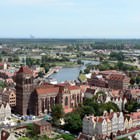
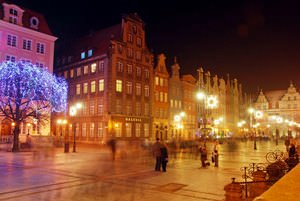 Gdansk is a city on the north of Poland. Its population estimates approximately 500 thousand of people.
 Gdansk is a large port on Baltic Sea. This is also an industrial center with well-developed machinery building and petrochemistry. Moreover, ships building and food industries are other specialties of this city. Such spheres as electronics, telecommunications, pharmaceutics and cosmetics are yet at the stage of formation. Amber processing is also an important segment of economics because Baltic Sea is the world’s largest source of amber. During summer Gdansk turns into a large center of tourism and its beaches are crowded not only by tourists from Poland, but by people from other countries as well.
Gdansk will be surely loved by fans of gastronomic tourism. The city is home to numerous attractive restaurants and cozy cafes. You will find Bar Bados next to a popular cinema. This …  Open
Open
Open
Gdansk is always visited by many travelers who wish to visit beautiful architectural monuments and historical sights that will surely leave many unforgettable memories. The city is also an … Open
Open
The most interesting place for walking is the Maria Street, which today, is entirely at the disposal of pedestrians. Once on this street were the richest houses and mansions, but almost all of them were destroyed during the Second World War. Subsequently, historical houses were completely reconstructed. Today they have interesting shops, handicraft workshops, as well as national restaurants and souvenir shops popular among tourists.
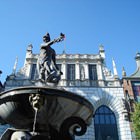
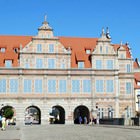
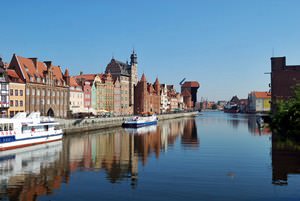 An outstanding architectural monument of the 17th century is the Great Arsenal. This majestic building is built in the Renaissance style. Until the 19th century, this building was used as an armory, and today it is occupied by the Academy of Fine Arts. This historical monument is very popular among tourists because, on its first floor is a very interesting shopping center.
Tourists should start observation of the city from visiting the local attractions. As a rule, visitors are recommended to make a walk through the streets of Dlugi Targ and Dluga. Simply each … Open
Open
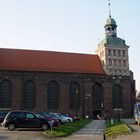
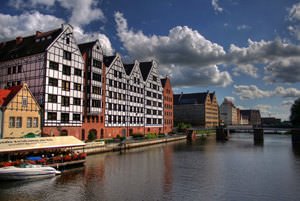 In the riverbed of the Vistula River, there is an ancient fortress of Wisloujscie, which is a preserved part of the once large-scale fortifications of the city. This fortress was built in the 15th century, and was repeatedly destroyed and rebuilt, so today it is a combination of different architectural styles. In the historical building, there is a central tower, which until the middle of the 18th century was used as a beacon. Today the ancient fortress is a historical monument of national importance. The original railway symbol of Gdańsk is a unique historical symbol, built at the turn of the 19th - 20th centuries. The elegant building of red brick was built in the Renaissance style. Its main distinctive feature is the clock tower, which rises to 50 meters.
This guide to iconic landmarks and sights of Gdansk is protected by the copyright law. You can re-publish this content with mandatory attribution: direct and active hyperlink to www.orangesmile.com.
City tours, excursions and tickets in Gdansk and surroundings
Reference information
Map of all shopping areas

Shopping streets in Gdansk
♥ Shopping area ' Długi Targ Mariacka' Gdańsk, 2.7 km from the center. On the map
 Photo
Photo

♥ Shopping area ' Bohaterów Monte Cassino' Sopot, 10.5 km from the center. On the map
Photo
Map of all parks
National and city parks around Gdansk
♥ Landscape Park 'Trójmiejski Park Krajobrazowy' , 4.7 km from the center. On the map
Photo
♥ Landscape Park 'Kaszubski Park Krajobrazowy' , 36.4 km from the center. On the map
Photo
♥ Landscape Park 'Park Krajobrazowy Mierzeja Wiślana' , 47.6 km from the center. On the map
Photo
♥ Landscape Park 'Nadmorski Park Krajobrazowy' , 51 km from the center. On the map
Photo
♥ Landscape Park 'Wdzydzki Park Krajobrazowy' , 60.7 km from the center. On the map
Photo
Map of all art museums
Art galleries in Gdansk and around
♥ Art museum 'Muzeum Narodowe' Gdańsk, 2.4 km from the center. On the map
Photo
Sightseeing in Poland: things to see
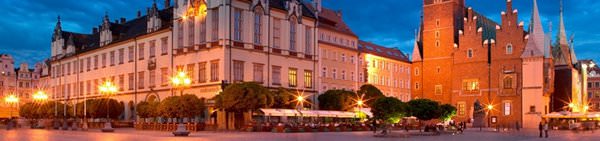 The Grand Theatre in Warsaw remains the most famous culture landmark in the country. The opening of the theatre took place in the beginning of the 19th century; in 1939 the building was severely damaged and then restored. Nowadays, the theatre looks as magnificent as over a century ago. The Grand Theatre hosts several important events, such as the International Vocalist Competition, and one of its halls has been transformed into the only Museum of Theatre in Poland.
… Open
The Grand Theatre in Warsaw remains the most famous culture landmark in the country. The opening of the theatre took place in the beginning of the 19th century; in 1939 the building was severely damaged and then restored. Nowadays, the theatre looks as magnificent as over a century ago. The Grand Theatre hosts several important events, such as the International Vocalist Competition, and one of its halls has been transformed into the only Museum of Theatre in Poland.
… Open
Car rental on OrangeSmile.com

Thailand Relaxes Its COVID-19 Policy
New Year events in Thailand are likely to bring more people this year because everyone is tired of lockdowns and craving normal life. Many tourists, who book hotels in Pattaya, Krabi, or Phuket for the holiday season, also want to participate. As champagne has become an essential drink for New Year celebrations, the question regarding alcohol consumption comes to mind. The government allowed serving alcoholic drinks during the New Year countdown but only open-air cafes and restaurants with good ventilation will be permitted to do this until 1 am on 1 January 2022. This rule is nationwide. Read this
26.04.2024
New Year events in Thailand are likely to bring more people this year because everyone is tired of lockdowns and craving normal life. Many tourists, who book hotels in Pattaya, Krabi, or Phuket for the holiday season, also want to participate. As champagne has become an essential drink for New Year celebrations, the question regarding alcohol consumption comes to mind. The government allowed serving alcoholic drinks during the New Year countdown but only open-air cafes and restaurants with good ventilation will be permitted to do this until 1 am on 1 January 2022. This rule is nationwide.
 Read this
26.04.2024
Search touristic sites on the map of Gdansk
 All about Gdansk, Poland - sightseeings, attractions, touristic spots, architecture, history, culture and cuisine. Prepare your trip together with OrangeSmile.com - find out the 'must see' things in Gdansk, which places to visit, which excursions to take, where the breathtaking views are waiting for you. Planning your trip with this travel guide will help your to get the most out of Gdansk in few days.