





Sightseeing in Leeuwarden - what to see. Complete travel guide
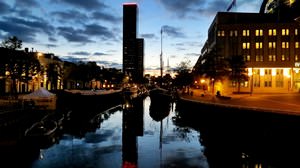 Leeuwarden is a town in Holland. It is also the administrative center of Friesland province. The population of the town estimated 88.7 thousands of people in 1970.
 Leeuwarden is an important crossing of railway lines and channels. In this place are well-developed such industries as metal processing and food (mostly milk) industry. In Leeuwarden is also located the University of Economy and Technology.
Leeuwarden is the capital of the province of Friesland, so in addition to traditional Dutch food, you can also try original Friesian dishes in local restaurants. Such include a variety of …  Open
Open
Open
In 1954 in the town was installed the monument devoted to a cow. The foundation of the monument has a craving that is translated as “Our mother” – a short and clear definition of the approach to this animal in Leeuwarden. Copyright www.orangesmile.com
Leeuwarden Residents are known for cherishing their traditions, hard work and an indifferent attitude to modern cultural trends. In 2018, the city was declared the cultural capital of … Open
Open
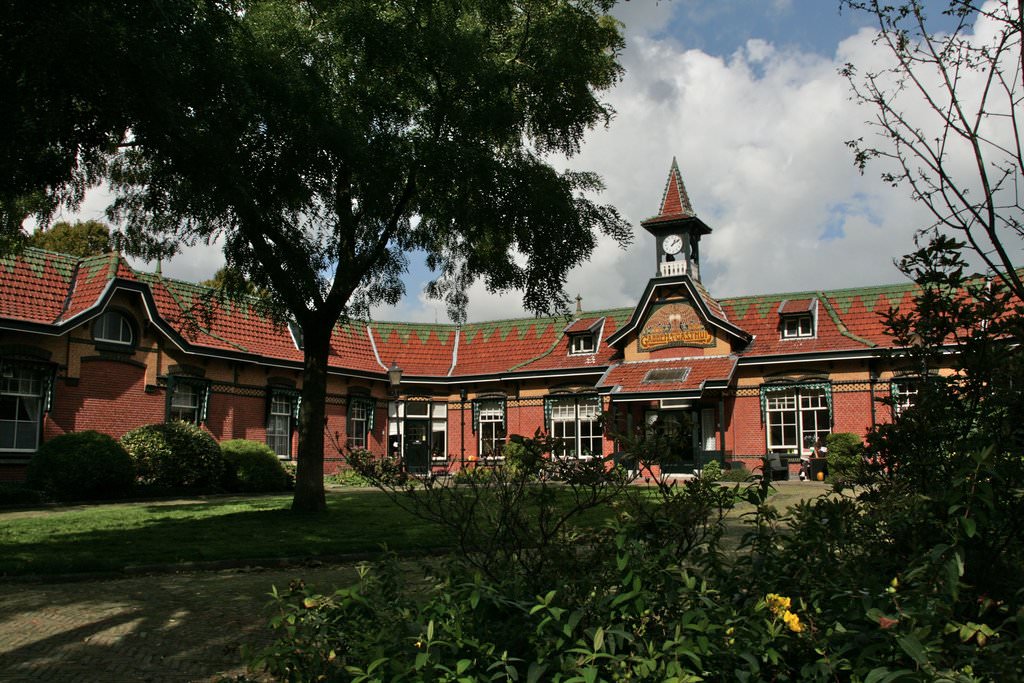
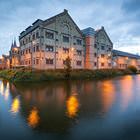
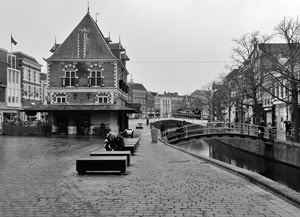 In the city, the building of the old town hall was preserved. Its construction began in 1715 by a talented local carpenter named Klas Bokes Balk. Now the Town Hall is a fairly large and complex architectural center. For hundreds of years of its existence, several additional housings have been completed. A distinctive feature of the historic building is large windows, due to which it looks less strict and formal than it could.
In the very heart of the city is one of its main historical symbols - the “falling” De Oldehove Tower. The erection of the church tower began in the first half of the 16th century. Now … Open
Open
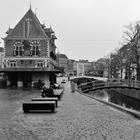
 An interesting feature of Leeuwarden is the diversity of unusual monuments. With each of them, there is bound to be an interesting story. The search for such monuments often turns into a fascinating quest for tourists. On the market square, you can see the monument to Het Friese Paard, which was opened in 1981 and is dedicated to the Friesian horse. Nearby is the monument to De Karnster, which depicts a woman whipping butter. The opening of this monument took place in 1979. It reminds locals and guests of the city that in the 16th century, oil was the main product that was weighed in the nearby Chamber of Commerce. Not far from the channel Korfmakerspijp, you can find a monument to the famous dancer-spy Mata Hari, whose home is the city of Leeuwarden.
Leeuwarden offers its guests excellent conditions for an active, exciting vacation. Within the city, you will find numerous entertainment centers to suit every taste, and out of it, there … Open
Open

This guide to iconic landmarks and sights of Leeuwarden is protected by the copyright law. You can re-publish this content with mandatory attribution: direct and active hyperlink to www.orangesmile.com.
City tours, excursions and tickets in Leeuwarden and surroundings
Reference information
Map of all castles

Survived castles around Leeuwarden
♥ Castle 'Schierstins' , 12.5 km from the center. On the map
 Photo
Photo

♥ Castle 'Menkemaborg' , 62 km from the center. On the map
Photo
♥ Castle 'Ilpenstein Castle' , 100.2 km from the center. On the map
Photo
♥ Castle 'Muiderslot' , 108.7 km from the center. On the map
Photo
Map of all parks
National and city parks around Leeuwarden
♥ National Park 'De Alde Feanen' , 11.4 km from the center. On the map
Photo
♥ National Park 'Lauwersmeer' , 30.6 km from the center. On the map
Photo
♥ National Park 'Schiermonnikoog' , 42.9 km from the center. On the map
Photo
♥ National Park 'Drents-Friese Wold' , 48.8 km from the center. On the map
Photo
♥ National Park 'Weerribben-Wieden' , 58.7 km from the center. On the map
Photo
Sights around Leeuwarden from our guide 'Extreme places on Earth'
Schokland and Surroundings
From the series “Top 15 Unesco Sites in Europe”
Check on the map: Distance from Leeuwarden center - 63.2 km.
Within a few years, the authorities decided to turn the island into a cultural center. So, the building of the old church, where the Schokland Museum is located today, was restored. Natuurlijk Schokland company is reviving lost landscapes and the architectural heritage of the island. A lot of deciduous trees were planted, old streets, and some of the buildings were restored at its expenses. There are plans to restore the old harbor and the lighthouse. Schokland has a huge national and patriotic significance for locals. The island remains a symbol of the struggle between people and the water element. …
Read further Distance from Leeuwarden center - 63.2 km.
Car rental on OrangeSmile.com

Hilton builds third luxury hotel in Kyoto
Hilton has announced that it will soon begin a project to build a new hotel in Kyoto. It will be located in the heart of the city, in the prestigious area of Sanjo-Kawaramachi. Guests will be able to easily reach all areas of interest in the dynamic city, many popular attractions and recreation areas will be within a walking distance from the hotel. Read this
25.04.2024
Hilton has announced that it will soon begin a project to build a new hotel in Kyoto. It will be located in the heart of the city, in the prestigious area of Sanjo-Kawaramachi. Guests will be able to easily reach all areas of interest in the dynamic city, many popular attractions and recreation areas will be within a walking distance from the hotel.
 Read this
25.04.2024
Search touristic sites on the map of Leeuwarden
 All about Leeuwarden, Netherlands - sightseeings, attractions, touristic spots, architecture, history, culture and cuisine. Prepare your trip together with OrangeSmile.com - find out the 'must see' things in Leeuwarden, which places to visit, which excursions to take, where the breathtaking views are waiting for you. Planning your trip with this travel guide will help your to get the most out of Leeuwarden in few days.