



Sightseeing in Delft - what to see. Complete travel guide
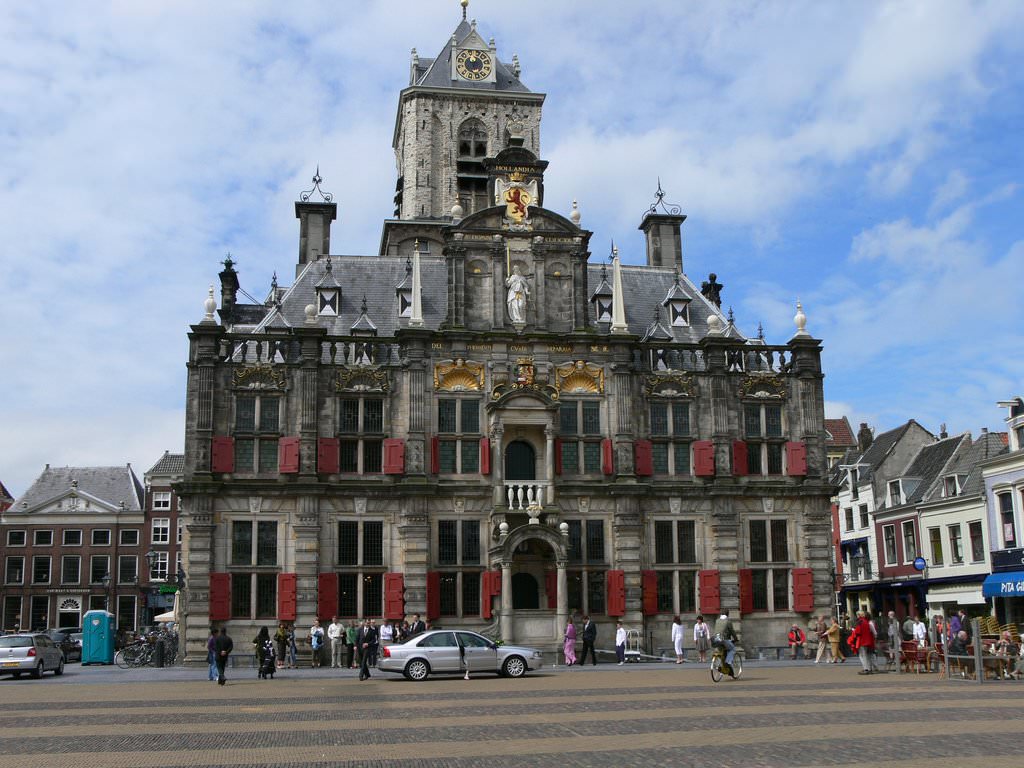
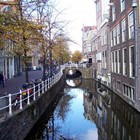
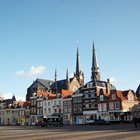
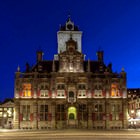
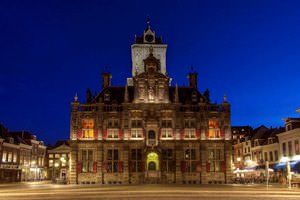
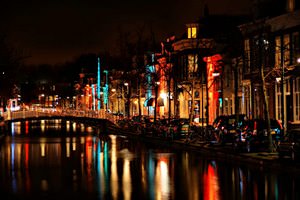 The centre of Delft is the location of more than 600 historical places of interest. Most of them were created in the 16th and 17th centuries, and some of them appeared even earlier. The city got it name after the first artificial canal – the Old Delft. Near it visitors will find several historical buildings. Among them you will see St Barbara Cathedral of the 14th century, which used to be an asylum and now it's a students' club. St Ippolit Chapel was built at the convent of the Holy Spirit in 1400. The building of Delft Water Department was constructed it the beginning of the 16th century. It features fantastic gothic style with a lot of fabulous sculptures and blazonry. Initially, it was a residential construction, but since the 17th century the building has become the location of the Royal Council. The Prince of Savoy Arms building features beautiful front made in the Renaissance style in the 16th century. Nowadays, this is the location of Public Archival Service. Babylon Church is the location of St Agatha Chapel. After the death of Prince William of Orange, he was buried there. The building of the Dutch East India Company was created in the 17th century. In the end of the 20th century the complex was turned into the Hall of Dutch East India Company. The hotel De Mol built in the 15th century is one of the oldest buildings in Delft.
Delft isn't rich in huge shopping malls and discount outlets, but it offers a unique range of shops and places to walk. The connoiseurs of vintage wines will be interested in visiting …  Open
Open
Open
There are many beautiful and interesting places in Delft, which will be liked by travelers with kids. Fans of outdoor activities traditionally enjoy visiting Beestenmarkt Square. The square … Open
Open
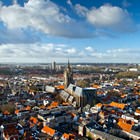
 The Old Church. The Old Church, which also used to be the churchyard of the Holy Spirit, was built in the beginning of the 13th century and as the time passed it turned into a huge church in different gothic styles. In the church some hundreds of people were buried, among them there are such famous people as corsairs Pit Hine and Martin Tromph, scientist Anthony van Levenhuk and artist Vermeer. The church tower of the 14th century is 75 m high and is a little bit lopsided. On the top the chimes of the 16th century are placed; they are so heavy that are wound only on special occasions.
National cuisine is quite simple, so many even call it "village". Herring is one of the most favorite dishes of the local people. These are slices of herring with fresh onion and mild-cured … Open
Open
The Easten Gates were built in the beginning of the 15th century and nowadays they are the only city gates that left till our time. Their towers are not so old: they were overbuilt in the 16th century. The Eastern Gates consist of the gates built both on water and ground, which are connected with walls. Nowadays the gates are used as domicile and showroom.
 The museums of the Delft University of Technology. The Museum of Technology is a permanent exhibition that tells us about steam-engines, computers and historical instruments for measure and weighing. In the Botanical Garden on the purpose of science they grow such plants, as cacao, sugar-cane, bamboo, coco-trees and citruses. In the Museum of Mineralogy you'll see the collection of fossils, stones, ore, minerals, meteorites and corals. In this museum you can also learn about such geological processes as volcanism or mountain formation.
This guide to iconic landmarks and sights of Delft is protected by the copyright law. You can re-publish this content with mandatory attribution: direct and active hyperlink to www.orangesmile.com.
City tours, excursions and tickets in Delft and surroundings
Reference information
Map of all shopping areas

Shopping streets in Delft
♥ Shopping area ' Grote Marktstraat' The Hague, 9.3 km from the center. On the map
 Photo
Photo

♥ Shopping area ' Spuistraat' The Hague, 9.4 km from the center. On the map
Photo
♥ Shopping area ' Noordeinde' The Hague, 9.9 km from the center. On the map
Photo
Map of all castles
Survived castles around Delft
♥ Castle 'Duivenvoorde Castle' , 12.9 km from the center. On the map
Photo
♥ Castle 'Burcht van Leiden' , 19.7 km from the center. On the map
Photo
♥ Castle 'Slot Teylingen' , 27.7 km from the center. On the map
Photo
♥ Castle 'Huys Dever' , 30.3 km from the center. On the map
Photo
♥ Castle 'Slot Heemstede' , 41.9 km from the center. On the map
Photo
Map of all parks
National and city parks around Delft
♥ National Park 'De Biesbosch' , 38.8 km from the center. On the map
Photo
♥ National Park 'Zuid-Kennemerland' , 48.4 km from the center. On the map
Photo
♥ National Park 'Oosterschelde' , 54.2 km from the center. On the map
Photo
♥ National Park 'De Loonse en Drunense Duinen' , 65 km from the center. On the map
Photo
♥ National Park 'Grenspark de Zoom - Kalmthoutse Heide' , 66.7 km from the center. On the map
Photo
Map of all art museums
Art galleries in Delft and around
♥ Art museum 'Mauritshuis' The Hague, 9.6 km from the center. On the map
Photo
♥ Art museum 'Museum Bredius' The Hague, 9.8 km from the center. On the map
Photo
♥ Art museum 'Gemeentemuseum' The Hague, 11.6 km from the center. On the map
Photo
♥ Art museum 'Museum Boijmans Van Beuningen' Rotterdam, 12 km from the center. On the map
Photo
♥ Art museum 'Kunsthal' Rotterdam, 12.3 km from the center. On the map
Photo
Sights around Delft from our guide 'Extreme places on Earth'
Keukenhof Flower Park
From the series “Top 16 Most Unusual and Original Parks and Gardens”
Check on the map: Distance from Delft center - 32.4 km.
Currently, the park area occupies 32 hectares. Each year, about 7 million flowers are planted on its territory. In addition, the park features more than 90 species of trees, as well as artificial lakes, ponds, canals, and streams. Keukenhof is made for walking, so the length of all its footpaths is around 15 km. Romantic natures will be able to travel around the lakes and canals by boat. Fans of art will love the park too, as it has a rich collection of sculptures of different eras. The youngest guests are sure to enjoy an entertainment complex, as well as a farm with animals. …
Read further Distance from Delft center - 32.4 km.
Lisse Tulip Fields
From the series “Top 13 Most Colorful and Picturesque Places on the Planet”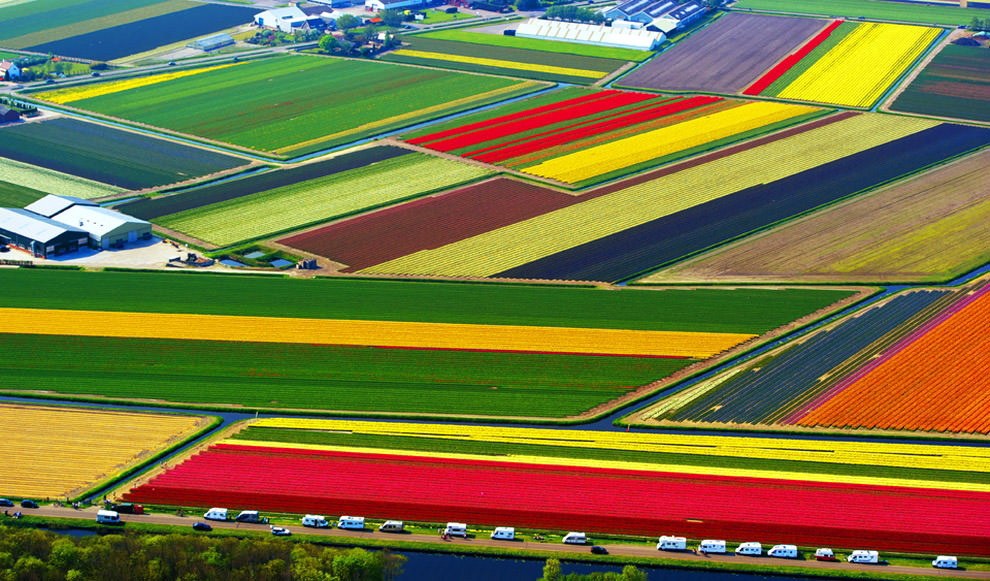
Check on the map: Distance from Delft center - 31 km.
In total, more than three billion flowers are planted annually on plantations. Almost all flowers grown on plantations are exported to the other countries. Tourists traveling to Lisse can visit the beautiful plantations as part of a bus excursion. The followers of the more original entertainments, prefer to enjoy the colorful landscape during the helicopter excursion. From the height you can appreciate the size of the plantations and their harmonious shape. …
Read further Distance from Delft center - 31 km.
Car rental on OrangeSmile.com

Thailand Relaxes Its COVID-19 Policy
New Year events in Thailand are likely to bring more people this year because everyone is tired of lockdowns and craving normal life. Many tourists, who book hotels in Pattaya, Krabi, or Phuket for the holiday season, also want to participate. As champagne has become an essential drink for New Year celebrations, the question regarding alcohol consumption comes to mind. The government allowed serving alcoholic drinks during the New Year countdown but only open-air cafes and restaurants with good ventilation will be permitted to do this until 1 am on 1 January 2022. This rule is nationwide. Read this
24.04.2024
New Year events in Thailand are likely to bring more people this year because everyone is tired of lockdowns and craving normal life. Many tourists, who book hotels in Pattaya, Krabi, or Phuket for the holiday season, also want to participate. As champagne has become an essential drink for New Year celebrations, the question regarding alcohol consumption comes to mind. The government allowed serving alcoholic drinks during the New Year countdown but only open-air cafes and restaurants with good ventilation will be permitted to do this until 1 am on 1 January 2022. This rule is nationwide.
 Read this
24.04.2024
Search touristic sites on the map of Delft
 All about Delft, Netherlands - sightseeings, attractions, touristic spots, architecture, history, culture and cuisine. Prepare your trip together with OrangeSmile.com - find out the 'must see' things in Delft, which places to visit, which excursions to take, where the breathtaking views are waiting for you. Planning your trip with this travel guide will help your to get the most out of Delft in few days.