

Lille Business Hotels
Search hotels
near your address
on Lille map
near your address
on Lille map
For all 37 business hotels in Lille, we show actual room availability.
BEST PRICE GUARANTEE
500.000+ SATISFIED CLIENTS
CHOICE OF 300.000 HOTELS
BOOKING IN 3 SIMPLE STEPS
INSTANT CONFIRMATION
37 hotels for business or conference trip in/near Lille

rates from
EUR 50
Address: 24 Place De La Gare, Lille
0.5 km from Lille center (hotel on the map)
Hotel rating from 1271 guests: 7.5
7.5
0.5 km from Lille center (hotel on the map)
Hotel rating from 1271 guests:
 7.5
7.5
Hotel Balladins Lille serves a buffet breakfast daily, which can be taken on the rooftop terrace with panoramic views. … Prices, discounts & booking

rates from
EUR 70
Address: 27 rue des Tours, Lille
0.6 km from Lille center (hotel on the map)
Hotel rating from 626 guests: 7.5
0.6 km from Lille center (hotel on the map)
Hotel rating from 626 guests:
7.5
Guestrooms at Hôtel des Tours are equipped with modern en suite facilities, flat-screen TVs and a desk. … Prices, discounts & booking

rates from
EUR 89.25
Address: 17 Place Des Reignaux, Lille
0.4 km from Lille center (hotel on the map)
Hotel rating from 782 guests: 8.9
0.4 km from Lille center (hotel on the map)
Hotel rating from 782 guests:
8.9
A buffet breakfast is served every morning at Hotel Up. Guests can enjoy a drink in the hotel bar while reading the newspapers provided. … Prices, discounts & booking

rates from
EUR 54
Address: 51 Rue Faidherbe, Lille
0.3 km from Lille center (hotel on the map)
Hotel rating from 409 guests: 7.7
0.3 km from Lille center (hotel on the map)
Hotel rating from 409 guests:
7.7
You will charm to the pleasure of its thirty-four rooms (smoking and non smoking rooms), designed all… Prices, discounts & booking

rates from
EUR 85
Address: Avenue Willy Brandt-Euralille, Lille
0.7 km from Lille center (hotel on the map)
Hotel rating from 178 guests: 7.9
0.7 km from Lille center (hotel on the map)
Hotel rating from 178 guests:
7.9
The Citadines Apart'hotel Lille Centre offers fully equipped studios and apartments which are ideal for one night or long stays. … Prices, discounts & booking

rates from
EUR 116.1
Address: 3 Rue de Paris, Lille
0.2 km from Lille center (hotel on the map)
Hotel rating from 225 guests: 7.9
0.2 km from Lille center (hotel on the map)
Hotel rating from 225 guests:
7.9
Hotel Carlton is within walking distance of Notre Dame de la Treille Cathedral and the Euralille shopping centre. … Prices, discounts & booking

rates from
EUR 55
Address: 13 Place De La Gare, Lille
0.5 km from Lille center (hotel on the map)
Hotel rating from 341 guests: 7.7
0.5 km from Lille center (hotel on the map)
Hotel rating from 341 guests:
7.7
All rooms are en suite and soundproofed. They have all the facilities you will need whether you want to sleep, relax or work. … Prices, discounts & booking

rates from
EUR 69
Address: avenue Le Corbusier, Lille
0.7 km from Lille center (hotel on the map)
Hotel rating from 709 guests: 7.5
0.7 km from Lille center (hotel on the map)
Hotel rating from 709 guests:
7.5
A buffet breakfast is served every morning and guests can use the microwave in the breakfast room featuring panoramic views. … Prices, discounts & booking

rates from
EUR 50
Address: 17, Rue Colson, Lille
1.1 km from Lille center (hotel on the map)
Hotel rating from 446 guests: 7.2
1.1 km from Lille center (hotel on the map)
Hotel rating from 446 guests:
7.2
Public parking is available on site and the N356 is just 5 km away. … Prices, discounts & booking

rates from
EUR 49
Address: 53-57 rue Christophe Colomb, Lille
1.4 km from Lille center (hotel on the map)
Hotel rating from 499 guests: 6.9
1.4 km from Lille center (hotel on the map)
Hotel rating from 499 guests:
6.9
Each room at Inter Hotel Parc des Expositions includes a flat-screen TV with BBC World channels and a telephone. … Prices, discounts & booking
Lille hotels by categories
Travel guide to Lille, France
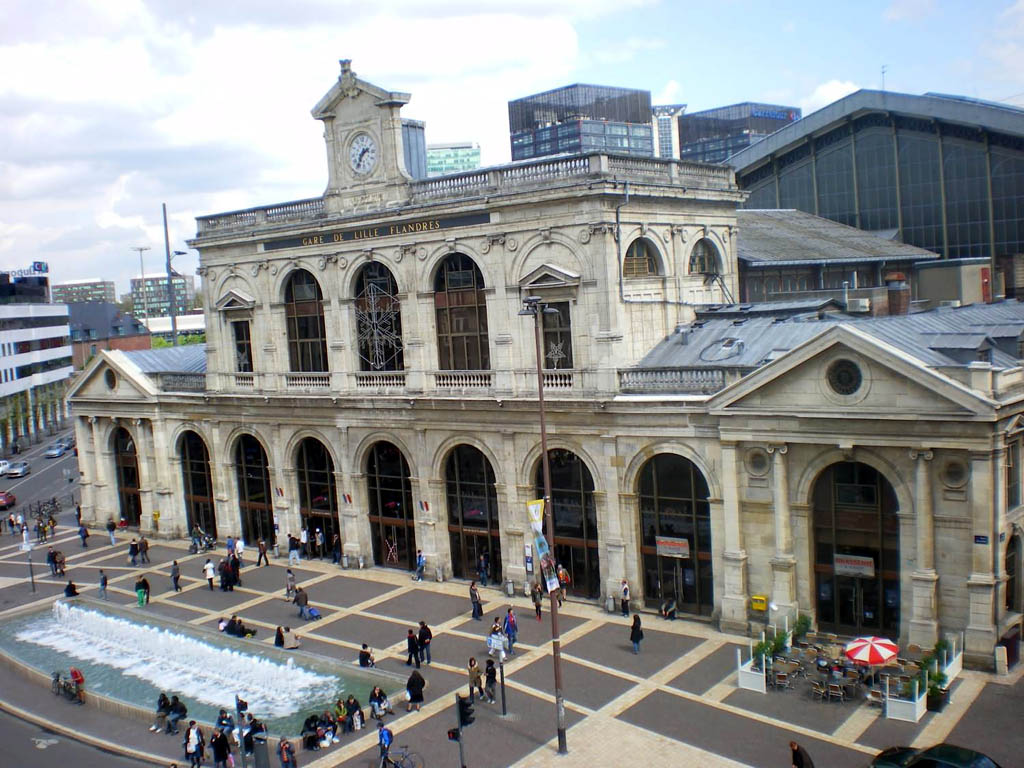

In the center of the historic district is a lovely L'Hotel de Ville. The first city hall was built on this site in the 19th century, but in 1916 it was completely destroyed by great fire. Construction of the new building was completed in 1926. The height of the tower is 105 meters. All visitors can climb to the observation deck on the top of the building; it offers unique panoramas. The interior of the building is unique too. You can see beautiful paintings and frescoes by contemporary artists in its corridors and halls.
Continue reading
This article about Lille is written by the orangesmile.com editorial team and is protected by the copyright law. The article can only be re-used with a direct link to www.orangesmile.com
Hotels for business or conference trip in destinations nearby Lille
CITIES:
La Madeleine hotels - 1.9 km
Mons-en-Baroeul hotels - 3.5 km
Marq-en-Baroeuil hotels - 3.9 km
Lezennes hotels - 4 km
Show more cities
La Madeleine hotels - 1.9 km
Mons-en-Baroeul hotels - 3.5 km
Marq-en-Baroeuil hotels - 3.9 km
Lezennes hotels - 4 km
Show more cities
REGIONS:
Nord-Pas-de-Calais business hotels - 15 km
West-Vlaanderen business hotels - 47.1 km
Hainaut business hotels - 64 km
Nord-Pas-de-Calais business hotels - 15 km
West-Vlaanderen business hotels - 47.1 km
Hainaut business hotels - 64 km
AIRPORTS:
Lesquin Airport LIL - 8.1 km
Kortrijk-Wevelgem International Airport KJK - 22.6 km
Merville Calonne Airport HZB - 30 km
Valenciennes-Denain Airport XVS - 44.1 km
Lesquin Airport LIL - 8.1 km
Kortrijk-Wevelgem International Airport KJK - 22.6 km
Merville Calonne Airport HZB - 30 km
Valenciennes-Denain Airport XVS - 44.1 km
Our recent articles related to Lille hotels
 The Autograph Collection Debuts in the UK
... most famous hotels by the brand are Hotel L’Hermitage Gantois in Lille, Fontecruz Lisboa hotel in Portugal, and Hotel De Bourgtheroulde in Roen. A month ago Marriott also announced the debut of the Autograph Collection in Germany – the company added Hotel am ... Read complete news
Mixed Results of Hotels in France in August
... segments, and only budget hotels managed to stabilize their rates. Relatively good performance was reached only by hotels in Le Havre, Rouen, and Lille. These northern towns benefited from repercussions of the London Olympic Games.
... Read complete news
Common Questions
Data securityBooking steps
Credit cards
Money blocking
Booking confirmation
Booking cancellation
Room prices
Hotel options

customer care
+31 4040 15044
support@orangesmile.com
We Accept


Top destinations

Albufeira
138 hotels
138 hotels

Blackpool
170 hotels
170 hotels

Chiang Mai
177 hotels
177 hotels

Geneva
82 hotels
82 hotels

Jerusalem
57 hotels
57 hotels

Lucca
77 hotels
77 hotels

Nantes
56 hotels
56 hotels

Playa Blanca
39 hotels
39 hotels

S. Gimignano
47 hotels
47 hotels

The Hague
35 hotels
35 hotels
Our Hotel News
Hilton builds third luxury hotel in Kyoto
Hilton has announced that it will soon begin a project to build a new hotel in Kyoto. It will be located in the heart of the city, in the prestigious...
Read further
2022-04-22
The Kingdom of Saudi Arabia has ambitious plans regarding the historic city of Diriyah that is located only 15 minutes from the central part of Riyadh....
Read further
2021-12-26
OrangeSmile.com provides 37 business hotels in/nearby Lille - often with high discounts and last-minute offers. Book online the most suitable hotel for your business travel to Lille, France with no reservation fee!